Monday, 13 August 2012

I've Re-Covered!


The transformation process is complete!
Nine months ago when I began my publishing odyssey, I was an unknown author. I did not hold out great expectations for the sale of my stories, so I designed my own covers to save money.
Little did I know that I would garner a loyal following of readers and that several of my books would make it to the top 100 in Amazon’s Romance Series category.
I decided the books had earned professionally designed covers.

The process began with my second series, Sons of Rhodri. I was put in touch with Kate Sterling who designed the beautiful cover for The Winds of the Heavens.

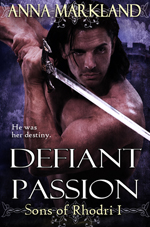
Thrilled with this cover, I asked Kate to do Defiant Passion and Dark and Bright. I think you’ll agree she did a masterful job.

The new covers brought an immediate increase in sales! Buoyed by this, I made the decision to re-cover my first series, The Montbryce Legacy.
This was a larger task since all four books are available in paperback as well as digital, and so I needed more than just fronts.
Since Kate had retired in the interim, I researched different designers and decided to go with Kim Killion of Hot Damn Designs. She has produced a unified “feel” for the series and I am very pleased with the results. Kim and her cohorts, Jennifer and Abby were great to work with, very patient with my idiosyncrasies and ramblings!

Anyone who has trawled the many websites of stock photos knows how time consuming and unfruitful it can be, especially for a writer like myself whose stories are set in the Middle Ages! 
One of the advantages of Kim’s company is that they have stock photos of their own to choose from, all of which are specifically geared to romance stories.

Hope you like the results of their hard work too!

Monday, 30 July 2012

Making Mead


As I mentioned previously, my latest release, SweetTaste of Love, is set partially in Lindisfarne Abbey where the monks became famous for their honey and mead. Below is a medieval recipe for mead, and the translation, though it’s fun to try to decipher it before peeking!

There are several videos on You-Tube which demonstrate how to make mead, including a recipe from 1593 for Burnt Mead.
Mead is also known in some places as Hydromel.

Considering the possibility that a crude form of the drink could easily have spontaneously occurred through ingress of water and naturally occurring yeast, mead may have been the first alcoholic beverage to pass the lips of man.


Known by many names and as different as individual snowflakes, Mead is a global beverage. Predating both grape wine and beer, it's known in various forms on every continent on Earth. Mead is perhaps best known as the preferred drink of Vikings and Celts, beloved by re-enactors everywhere as the authentic drink of the medieval times.

Mead was traditionally drunk by a newly-married couple on their wedding night, and the hero and heroine of another of my books follow this custom (Ram and Mabelle in Conquering Passion), though Mabelle is too nervous to drink hers. Ram makes a chauvinistic comment (somewhat typical for him) and she ends up hoping he will choke on his mead!

There are different types of mead, including meth and metheglin, which was enriched with finer herbs and spices, as the Cellarer of Lindisfarne, Brother Tristan explains to our hero, Aidan:
“...ordinary meth for the common folk and metheglin for the nobility.”
Aidan suspected some of the latter would find its way into the hands of the Abbot and his cronies. “What’s the difference?”
Brother Tristan put a finger to his chapped lips and looked around. “Lavender, and sometimes rosemary,” he whispered with a conspiratorial wink...

Mead cannot be made without yeast. In the middle ages there were many natural yeasts used which just floated in the air. People sometimes called the yeast godisgood, because without it there would be no fermentation and it was considered a boon from God. Yeast was more frequently referred to as barm, particularly in the north of England. I can recall as a child enjoying warm barm cakes, as does our heroine in Sweet Taste of Love, Nolana Kyncade.

This is the first time I have introduced a Scot into one of my stories, so I hope you like Nolana. Though Aidan’s father, (Caedmon, from A Man of Value) was born in Scotland, he was a Saxon and never considered himself a Scot!

Medieval Mead Recipe
(from "Tractatus de magnete et operationibus eius")

ffor to make mede. Tak .i. galoun of fyne hony and to þat .4. galouns of water and hete þat water til it be as lengh þanne dissolue þe hony in þe water. thanne set hem ouer þe fier & let hem boyle and ever scomme it as longe as any filthe rysith þer on. and þanne tak it doun of þe fier and let it kole in oþer vesselle til it be as kold as melk whan it komith from þe koow. than tak drestis of þe fynest ale or elles berme and kast in to þe water & þe hony. and stere al wel to gedre but ferst loke er þu put þy berme in. that þe water with þe hony be put in a fayr stonde & þanne put in þy berme or elles þi drestis for þat is best & stere wel to gedre/ and ley straw or elles clothis a bowte þe vessel & a boue gif þe wedir be kolde and so let it stande .3. dayes & .3. nygthis gif þe wedir be kold And gif it be hoot wedir .i. day and .1. nyght is a nogh at þe fulle But ever after .i. hour or .2. at þe moste a say þer of and gif þu wilt have it swete tak it þe sonere from þe drestis & gif þu wilt have it scharpe let it stand þe lenger þer with. Thanne draw it from þe drestis as cler as þu may in to an oþer vessel clene & let it stonde .1. nyght or .2. & þanne draw it in to an oþer clene vessel & serve it forth.

For to make mead. Take 1 gallon of fine honey and to that 4 gallons of water and heat that water till it be as long. Then dissolve the honey in the water, then set them over the fire and let them boil and ever scum it as long as any filth rises thereon.
Then take it down off the fire and let it cool in another vessel till it be as cold as milk when it comes from the cow. Then take lees from the finest ale or else barm (yeast) and cast it into the water and honey and stir all well together, but first look before putting your yeast in that the water with the honey be put in a clean tub and then put in your yeast or else the lees for that is best and stir well together.
Lay straw or else cloths about the vessel and above if the weather is cold and so let it stand 3 days and 3 nights if the weather is cold. And if it is hot weather, 1 day and 1 night is enough at the full. But ever after 1 hour or 2 at the most assay thereof and if you will have it sweet take it the sooner from the lees and if you will have it sharp let it stand the longer therewith.
Then draw it from the lees as clear as you may into another vessel clean and let it stand 1 night or 2 and then draw it into another clean vessel and serve it forth.
Cheers!

For links to more interesting articles on Mead click here.

Friday, 27 July 2012

Medieval Beekeeping


The plot of my latest release, Sweet Taste of Love, takes us to the famous Lindisfarne Abbey off the north east coast of England. Among other things, Lindisfarne was famous for its mead, and to make mead you need honey.
I learned a lot about medieval beekeeping in my research for this book that I thought I would share with you.
Egyptians believed bees were the tears of Ra

Honeybees were among the first domesticated creatures, and yet, they are still basically 'wild'. The science of commercial beekeeping has been part of man's experience on planet Earth for at least three thousand years. Indeed, on the walls of the Sun Temple of the Pharaoh Nyuserre Ini (2400 BC), workers are depicted blowing smoke into hives as they remove honeycombs. Bees have often been associated with the divine.

Medieval beehives were conical baskets called skeps. The word derived from the Anglo Saxon "Skeppa" which means literally, basket. They were made of woven wicker bands with a daub or clay mud coat, or could be fashioned from long straw coiled and stitched with blackberry briar. My hero, Aidan, suffers lacerations to his hands from splitting and stripping thorns from blackberry brambles for the purpose. The straw skep is said to have started with tribes west of the Elbe in Germany.

Skeps were broken open in the spring, but the bees were killed beforehand, usually with sulphur smoke. The monks of Lindisfarne then offered fervent prayers for the repopulation of new skeps by new colonies. If the honey and wax were taken later in the year, there would be no chance for a new colony to establish itself before winter set in. Without the summer stores, the bees would perish.

Skeps were often protected in the winter by hackles, pointy shaped straw tents. This word came from the Old English hacele, meaning a cloak or mantle. It was later applied to birds’ plumage, particularly roosters and led to our expression, raising the hackles.
Skep in bee bole

On Lindisfarne, the skeps were sheltered in bee boles, recesses in the south wall.


Skeps at a Dutch bee market c.1900
Hackle
Sometimes the bees outgrew the skep and then an extra chamber called an eke would be added to the bottom to allow them more room. This gave rise to the present day use of the word eke, meaning to stretch out or make something go further.
Sometimes the trunks of trees were hollowed out to provide hives for bees. In this case, the bees would be lulled into gorging on the honey by smoke produced from slow burning cow dung. Fortunately for Aidan, he doesn’t have to hold the hot clay shell of smouldering cow dung as the monks gather the honey from the hives in the tree trunks. However, he does have to collect the honey and since these hives were normally quite high off the ground to protect them from animals, it becomes a back breaking chore.
By now you may have gathered that the hero of Sweet Taste ofLove is a monk! Hmmm! How does that work in a romance?
Sugar cane was unknown in the early middle ages, so honey was an important sweetener. It has been argued that the main product of medieval beekeeping was not the honey, but rather the beeswax. This energy rich natural substance was used by chandlers to make candles and clerics made writing tablets for the Church right up until the Reformation in 1536. Throughout history honey has been produced, but in medieval times was largely the preserve of the nobility. It was used in baking confectionery and making sweet tasting folk remedies, wood polish and the manufacture of Mead, which is the oldest alcoholic drink.
More to come on mead making.

Tuesday, 24 July 2012

Holy Island of Lindisfarne

Lindisfarne is a tidal island off the north-east coast of England. It is also known as Holy Island and constitutes a civil parish in Northumberland. The Old English name, Lindisfarena, which means "travellers from Lindsey", indicating that the island was settled from the Kingdom of Lindsey, or possibly that its inhabitants travelled there.

 
The monastery of Lindisfarne was founded by Irish monk Saint Aidan, who had been sent from Iona off the west coast of Scotland to Northumbria at the request of King Oswald (c. AD 635). The hero of my latest release, Sweet Taste of Love, is named Aidan.
St. Aidan

The monastery became the base for Christian evangelising in the North of England and also sent a successful mission to Mercia. Monks from the community of Iona settled on the island. Northumberland's patron saint, Saint Cuthbert, was a monk and later Abbot of the monastery, and his miracles and life are recorded by the Venerable Bede. Cuthbert later became Bishop of Lindisfarne. He was buried here, his remains later translated to Durham Cathedral. Eadberht of Lindisfarne, the next bishop (and Saint) was buried in the place from which Cuthbert's body was exhumed earlier the same year when the priory was abandoned in the late ninth century.

At some point in the early 700s the famous illuminated manuscript known as the Lindisfarne Gospels, an illustrated Latin copy of the Gospels of Matthew, Mark, Luke and John, was made probably at Lindisfarne and the artist was possibly Eadfrith, who later became Bishop of Lindisfarne.
Cover of Lindisfarne Gospels

Sometime in the second half of the tenth century a monk named Aldred added an Anglo-Saxon (Old English) gloss to the Latin text, producing the earliest surviving Old English copies of the Gospels. The Gospels were illustrated in an insular style containing a fusion of Celtic, Germanic and Roman elements; they were probably originally covered with a fine metal case made by a hermit called Billfrith.


In 793, a Viking raid on Lindisfarne caused much consternation throughout the Christian west, and is now often taken as the beginning of the Viking Age. The Anglo-Saxon Chronicle records:
In this year fierce, foreboding omens came over the land of Northumbria. There were excessive whirlwinds, lightning storms, and fiery dragons were seen flying in the sky. These signs were followed by great famine, and on 8 January the ravaging of heathen men destroyed God's church at Lindisfarne.

The more popularly accepted date for the Viking raid on Lindisfarne is 8 June; it is believed vi id Ianr, is presumably an error for vi id Iun (June 8) which is the date given by the Annals of Lindisfarne, when better sailing weather would favour coastal raids.

Alcuin, a Northumbrian scholar in Charlemagne's court at the time, wrote:
Never before has such terror appeared in Britain as we have now suffered from a pagan race. The heathens poured out the blood of saints around the altar, and trampled on the bodies of saints in the temple of God, like dung in the streets.

Viking raids in 875 led to the monks fleeing the island with St Cuthbert's bones (now buried at the Cathedral in Durham). The bishopric was transferred to Durham in AD 1000. The heroine of Sweet Taste of Love, Nolana Kyncade, is being escorted to a nunnery under the protection of the Bishop of Durham when...oops! almost gave away too much!

The Lindisfarne Gospels now reside in the British Library in London, to the annoyance of some Northumbrians. The priory was re-established in Norman times in 1093 as a Benedictine house and continued until its suppression in 1536 under Henry VIII. Our hero, Aidan becomes a monk there in 1121 AD. What’s that? A monk the hero of a romance novel?

Painting of the ruins of Lindisfarne (1798)
A causeway connects the island to the mainland of Northumberland and is flooded twice a day by tides, something well described by Sir Walter Scott:
For with the flow and ebb, its style
Varies from continent to isle;
Dry shod o'er sands, twice every day,
The pilgrims to the shrine find way;
Twice every day the waves efface
Of staves and sandalled feet the trace.

The Holy Island of Lindisfarne is well known for its mead, and the title, Sweet Taste of Love, came about because of the Abbey’s fame for honey and mead. In medieval times when monks inhabited the island, it was thought that the soul was in God's keeping, but the body must be fortified with Lindisfarne Mead. The monks have long vanished, and the mead's recipe remains a secret of the family which still produces it at St Aidan's Winery, though our hero, Aidan caught a glimpse of the closely guarded recipe written in brown ink on vellum!
Lindisfarne seen from the mainland
Sweet Taste of Love is Book 2 of the FitzRam Family series.

Thursday, 5 July 2012

William the Conqueror Would Have Turned In His Tomb


Empress Matilda (1102 – 10 September 1167), also known as Matilda of England or Maude, was the daughter and heir of King Henry I of England. Matilda and her younger brother, William Aetheling, were the only legitimate children of King Henry to survive to adulthood. However, her brother's death in the White Ship disaster in 1120 resulted in Matilda being her father's sole heir.


As a child, Matilda was betrothed to and later married Heinrich V, Holy Roman Emperor, acquiring the title Empress. It is this move to Germany that forms the basis of the plot of my latest release, Carried Away. She was twelve when she married the Holy Roman Emperor, so in my book we only see her as a (somewhat spoiled) little girl.

However, Matilda would later play a significant role in the history of England.

She and Henry V had no known children and after eleven years of marriage Henry died, leaving Matilda widowed. However, she was then married to Geoffrey, Count of Anjou in a union which her father hoped would produce a male heir and continue the dynasty. She had three sons by Geoffrey of Anjou, the eldest of whom eventually became King Henry II of England.


Matilda’s grandfather, William the Conqueror was probably turning in his tomb at the idea of his granddaughter marrying an Angevin! Normans and Angevins were traditional enemies, neighbours who fought bitterly over control of land.
Stephen of Blois
Upon the death of her father, Henry I, in 1135, Matilda was usurped to the throne by her rival and cousin Stephen of Blois, who moved quickly and became crowned King of England whilst Matilda was in Normandy, pregnant with her third child. Interestingly enough, Stephen was supposed to sail aboard the doomed White Ship, but left the vessel at the last moment.
Henry II, first Plantagenet King of England


Their rivalry for the throne led to years of unrest and civil war in England that have been called The Anarchy. Matilda was the first female ruler of the Kingdom of England, though the length of her effective rule was brief - a few months in 1141. She was never crowned and failed to consolidate her rule (legally and politically). For this reason, she is normally excluded from lists of English monarchs, and her rival (and cousin) Stephen of Blois is listed as monarch for the period 1135–1154. She campaigned unstintingly for her oldest son's inheritance, living to see him ascend the throne of England in 1154.


Readers of the Montbryce Legacy books will recall Blythe Lacey FitzRam as a newborn in A Man of Value. Carried Away is her story, and is the first book in a new series, the FitzRam Family. Incidentally, the White Ship disaster features prominently in my soon to be released novel, Sweet Taste of Love, the second book in the series.

Friday, 29 June 2012

The City of Cologne

The historical background for my latest release, Carried Away, is a little known conflict that took place at the beginning of the 12th century between the Holy Roman Emperor, Heinrich V, and the citizens of Cologne.
Agrippina-Nero's Mother


Most people think of the famous cathedral when they think of Cologne, but it is a much more ancient city. The first urban settlement on the grounds of what today is the centre of Cologne was Oppidum Ubiorum, which was founded in 38 BC by the Ubii, a Germanic tribe. In 50 A.D. the Romans founded Colonia on the Rhine and the city became the provincial capital of Germania Inferior in 85 A.D. The city was named "Colonia Claudia Ara Agrippinensium" in 50 A.D. because Agrippina was born there.

Rudder of Roman boat


Considerable Roman remains can be found in present-day Cologne, especially near the wharf area, where a notable discovery of a 1900 year old Roman boat was made in late 2007. In Carried Away, the hero, Dieter von Wolfenberg, takes his heroine on a tour of the Roman ruins in an effort to win her over.

From 260 A.D. to 271 A.D., Cologne was the capital of the Gallic Empire. In 310 A.D., under Constantine, a bridge was built over the Rhine at Cologne. The imperial governors of Rome resided in the city and it became one of the most important trade and production centres in the Roman Empire north of the Alps.
What Colonia Agrippina might have looked like


Maternus, who was elected as bishop in 313 A.D., was the first known bishop of Cologne. The city was the capital of a Roman province until occupied by the Franks in 459 A.D. In 785 A.D., Cologne became the seat of an archbishopric.


Middle Ages

Relics of the Three Wise Men-Cologne Cathedral
During the time of the Holy Roman Empire in the Middle Ages, Cologne's location on the river Rhine placed it at the intersection of the major trade routes between east and west and was the basis of Cologne's growth. Besides its economic and political significance Cologne also became an important centre of medieval pilgrimage, when Cologne's Archbishop Rainald of Dassel gave the relics of the Three Wise Men to Cologne's cathedral in 1164 (after they in fact had been captured from Milan). Besides the three Magi, Cologne preserves the relics of Saint Ursula and Albertus Magnus.

The economic structures of medieval and early modern Cologne were characterized by the city's status as a major harbour and transport hub upon the Rhine. The efforts of Holy Roman Emperor, Heinrich V, to cut Cologne off from the Rhine prompted the rebellion which forms the basis of the plot of Carried Away.

Craftsmanship was organized by self-administering guilds, some of which were exclusive to women. As a free city Cologne was a sovereign state within the Holy Roman Empire and as such had the right (and obligation) to maintain its own military force. Wearing a red uniform these troops were known as the Rote Funken (red sparks). These soldiers were part of the Army of the Holy Roman Empire and fought in the wars of the 17th and 18th century, including the wars against revolutionary France, when the small force was almost completely wiped out in combat. The tradition of these troops is preserved as a military persiflage by Cologne's most outstanding carnival society, the Rote Funken.


World War II

During World War II, Cologne was a Military Area Command Headquarters. Cologne endured 262 air raids which caused approximately 20,000 civilian casualties and almost completely wiped out the centre of the city. During the night of 31 May 1942, Cologne was the target of "Operation Millennium", the first 1,000 bomber raid by the Royal Air Force in World War II. 1,046 heavy bombers attacked their target with 1,455 tons of explosives, approximately two-thirds of which were incendiary devices. This raid lasted about 75 minutes, destroyed 600 acres of built-up area, killed 486 civilians and made 59,000 people homeless. By the end of the war, the population of Cologne had been reduced by 95%. This loss was mainly caused by a massive evacuation of the people to more rural areas. The same happened in many other German cities in the last two years of war. At the end of 1945, the population had already risen to about 500,000 again.

In 1945 architect and urban planner Rudolf Schwarz called Cologne the "world's greatest heap of rubble." Schwarz designed the master plan of reconstruction in 1947, which called for the construction of several new thoroughfares through the downtown area.
St. Kunibert
The destruction of 95% of the city centre including the famous Twelve Romanesque churches like St. Gereon, Great St. Martin, St. Maria im Kapitol, and several other monuments meant a tremendous loss of cultural treasures. The rebuilding of those churches and other landmarks was not undisputed among leading architects and art historians at that time, but in most cases, civil intention prevailed. The reconstruction lasted until the 1990s, when the Romanesque church of St. Kunibert was finished.

Carried Away is Book One of a new series entitled The FitzRam Family, and is available from Amazon.

Monday, 25 June 2012

What's A Hovawart?

The Hovawart is a little-known German dog breed. The name of the breed means "an estate guard dog," which is the original use for the breed. The breed originated in the Black Forest region and was first described in text and paintings in medieval times.

 
In my latest release, Carried Away, the hero, Dieter von Wolfenberg, owns a Hovawart named Vormund (Guardian). Vormund is one of three dogs in the story, but  he saves Dieter’s life. I chose this breed of dog because my story is set in Germany at the beginning of the 12th century. The plot revolves around the rebellion of the citizens of Cologne against the Holy Roman Emperor, Heinrich V.

Readers of The Montbryce Legacy series will recognize the heroine of this book, Blythe Lacey FitzRam, daughter of Sir Caedmon FitzRam. She appeared as a newborn in A Man of Value. Now she’s all grown up and a lady-in-waiting to Adelaide, daughter of King Henry I of England. Adelaide married the Holy Roman Emperor, Heinrich V and that is how Blythe ends up in Germany!

The Hovawart is a medium dog. Male Hovawarts are 63-73 cm (25"–29") and females 58-65 cm (22.5"–26") at the withers. The weight is approximately 30–45 kg (65–95 pounds). The correct color descriptions are Black, Black and Gold, and Blond. Vormund is black and gold.

The Hovawart is an outstanding watch dog and somewhat reserved towards strangers. They make excellent family dogs as they are totally devoted to their family. They are a working dog breed, and require a consistent and loving yet strict training and meaningful activity throughout their lives.

Statue of Von Repkow
One of the first documented recordings comes from the year 1210 when the German castle at Ordensritterburg was besieged by Slavic invaders. The castle fell and its inhabitants, including the Lord, were slaughtered. However, the Lord's infant son was saved by one of the castle's Hovawarts. In spite of being wounded itself, the dog dragged the tiny child to a neighbouring castle and thus saved the boy's life. This young boy, Eike von Repkow, grew up to become a legendary figure in the history of German law. He later published the Sachsenspiegel, the oldest Code of Law to survive from medieval Germany. Not surprisingly, the Hovawart is mentioned with praise. The Schwabenspiegel, a law text published in 1274 and based on Eike von Repkow's work, lists the Hovawart among the dogs you have to replace and pay restitution for if they are killed or stolen.
By 1473, Heinrich Mynsinger described the Hovawart as one of "The Five Noble Breeds" and among its uses listed that it was useful for tracking the robber and miscreant. This along with references to the Hovawart in German law show that it was a readily identifiable breed and held in similar esteem to that of hunting dogs.

Following the medieval period, the popularity of the Hovawart began to decline. Newer breeds such as the German Shepherd slowly replaced the Hovawart as a guard and working dog until it had almost disappeared by the beginning of the twentieth century. Around 1915 a group of enthusiasts decided to try to save the breed. Predominant in this group was the zoologist Kurt Friedrich König. They started by looking for dogs in the farms of the Black Forest region. König then started a careful breeding program using these dogs and crossed them with Kuvaszok, Newfoundlands, German Shepherds, Leonbergers, a Bernese Mountain Dog and an African Hunting Dog. After much work the group was rewarded in 1922 when the first Hovawart litter was entered into the German Breeding Registry. The enthusiasts continued their work and in 1937 the German Kennel Club officially recognised the Hovawart.

All this work was almost undone with the outbreak of the Second World War. Because of their abilities many Hovawarts were used in the German war effort and perished. By 1945 only a few remained. Enthusiasm for the breed remained and in 1947, Otto Schramm and some fellow enthusiasts in Coburg formed a new club, the "Rassezuchtverein für Hovawart-Hunde Coburg" which is still in existence today. In 1964 the German Kennel Club recognised the Hovawart as the country's seventh working breed and around this time enthusiasm for the breed started to develop in other countries.

The Hovawart does exceptionally well in search and rescue, tracking and working dog activities. The females are generally lighter in build. In training and especially obedience work the trainer must keep positive reinforcement in mind all the time, as this mountain dog is not as eager to please as many other working dog breeds: it always needs some kind of motivation.

The Hovawart works with you and not for you. They have the ability to think and act independently. Their guarding instinct for example does not require any real training; it is inherentsomething they were bred for. The Hovawart may easily become reluctant if training is built only on punishments. The owner of a Hovawart should ideally have previous experience in owning and training a dog and as such the Hovawart is not usually suitable as a first dog.

Carried Away is Book I of The FitzRam Family trilogy.